By
Marcus Lane
Senior Writer, Foxy AI Academy
By Marcus Lane, Senior Writer · Last updated May 2026 · 13 min read
Building an AI influencer in 2026 is not a novelty project anymore. It is a business model. People are running AI personas on Instagram and Fanvue that pull real subscription revenue every month, and the ones who treat it like an operation, not a hobby, are the ones who last. The barrier is not the technology. The technology is cheap and good. The barrier is doing the boring parts well: picking a niche, locking a consistent face, posting on a cadence, and funneling attention into income. This guide walks the whole build, step by step, the way someone who wants it to actually pay would do it.
Want a character whose face never drifts? Foxy builds an AI twin from a small set of source images, so every photo and video stays the same person. See how AI influencer creation works with Foxy
What you'll learn
What an AI influencer actually is in 2026, and what it is not
How to pick a niche that brands and audiences both understand
The hardest part of the build: keeping one consistent face across every post
How to set up the public presence on Instagram and TikTok
The posting cadence that compounds instead of stalling
How to turn an audience into subscription and brand income
What it costs, how long it takes, and the mistakes that kill accounts early
Key takeaways
An AI influencer is a fictional character you build, run, and monetize. The work is consistency and distribution, not the image generation itself.
Character consistency is the make-or-break. If the face drifts between posts, the account reads as fake and growth stalls.
Instagram and TikTok are the discovery engines. Fanvue and similar platforms are where the money is made.
Most accounts need three to six months of consistent posting before monetization gets meaningful. Treat the first quarter as a build, not a payday.
The winners run it like a system: a content calendar, a repeatable production pipeline, and clean disclosure that the persona is AI.
The AI influencer build at a glance
Stage | What you do | Realistic timeline |
|---|---|---|
Concept | Pick a niche, name, look, and personality | 1 to 3 days |
Consistency | Lock a repeatable face and body | 1 week |
Presence | Set up Instagram and TikTok, build a starter feed | 1 to 2 weeks |
Growth | Post 4 to 7 times a week, learn what lands | 3 to 6 months |
Monetization | Open a subscription platform, sell PPV and DMs | Month 3 onward |
What an AI influencer actually is in 2026
An AI influencer is a fictional character with a consistent face, a personality, and a public account that posts like a real creator. The audience knows, or can easily find out, that the persona is AI. That part matters and we will come back to it.
What an AI influencer is not: a one-off pretty image. The single biggest misread of this space is thinking the hard part is generating a good photo. It is not. Image quality is a solved problem. You can produce a striking portrait in seconds. The hard part is producing the same person in a hundred different settings, then showing up consistently enough that an algorithm and an audience both start to trust the account.
If you come from ecommerce or dropshipping, the mental model that works is this: the character is the product, the social account is the storefront, and the subscription platform is the checkout. You are not in the image business. You are in the attention business, and AI is just what lowers your cost of goods.
Step 1: Choose a niche and design the character

Lock the niche before you generate a single image. The concept decides everything downstream.
Niche first, always. A character without a clear lane is invisible to both the algorithm and to brands. The niches that perform in 2026 are the ones with obvious commercial gravity: fashion and lifestyle, fitness and wellness, travel, and gaming or tech. Each of those has a built-in audience and a built-in set of advertisers who already spend on creators.
Once the niche is set, design the character on paper before you touch a generator. You need a name, an age range, a look, a home base, and a personality. Personality is the part people skip and it is the part that actually retains followers. A face gets the click. A voice keeps the follow.
Pro tip: Write a one-page character bible: name, backstory, three personality traits, the way they talk, what they would never post. You will reference it every week, and it is what keeps the account from feeling like a random photo dump.
Keep the design realistic and adult. Tasteful, aspirational, and platform-safe beats shock value every time, because brand deals and platform stability both depend on it. If you want a fuller view of the tool landscape before you commit, our roundup of the best AI tools for influencers in 2026 covers what each category is actually good for.
Step 2: Build a consistent face and body
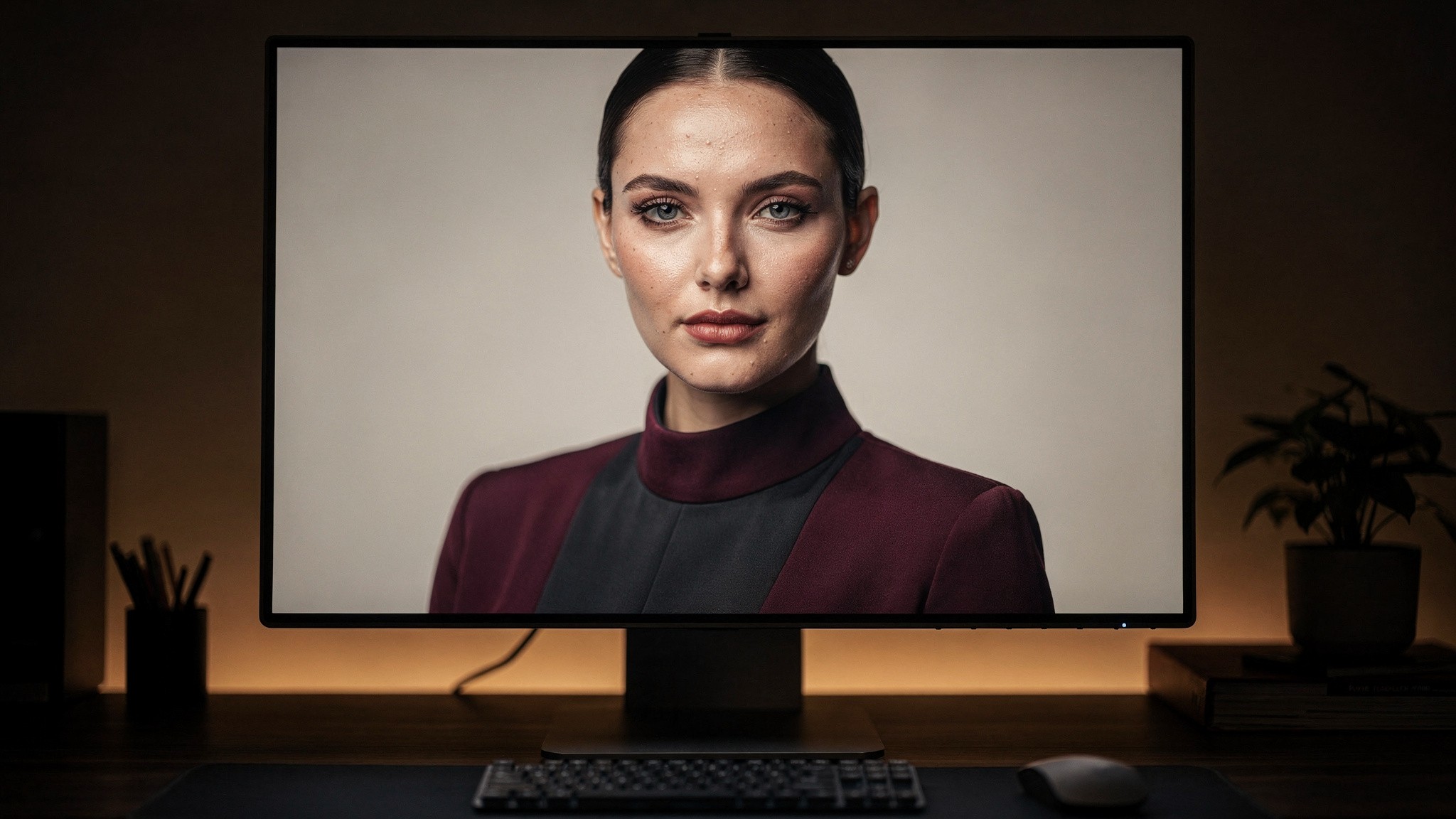
Consistency is the whole game. The same character, recognizable in every post, is what separates a real account from a folder of pretty pictures.
This is the step that decides whether your account works. A generic AI image generator will give you a beautiful person who looks slightly different in every render. Slightly different eyes, a different jawline, a different vibe. To an audience scrolling fast, that reads as fake, and the account never builds the familiarity that growth depends on.
The fix is a character model that is trained or built around one specific likeness, then reused for every generation. That is exactly what an AI twin is: you give the system a small set of source images of your character, it builds a model of that likeness, and from then on every photo and video is the same person. The realism and the consistency are the product. That is the difference between a persona that compounds and one that resets every week.
Build your character once, then generate forever. Foxy is built for likeness, so your AI influencer stays the same person across every post, outfit, and scene. Build your AI influencer with Foxy
Once the face is locked, build out the body of work: portraits, full-body shots, different outfits, different locations, a few candid-style frames. You want a library you can draw from, not a scramble every posting day. Tools like Foxy also generate ultra-realistic AI images and AI videos and Reels from the same twin, which matters because video is non-negotiable on social in 2026.
Step 3: Set up the public presence

Instagram and TikTok are the discovery layer. Treat the public account like a storefront window, not an afterthought.
Instagram is the home base for most AI influencers, with TikTok close behind. Both are visual-first and short-video-first, which happens to match exactly what AI tools produce well. Set up a clean profile on Instagram and TikTok, with a name that fits the niche, a bio that says what the account is, and a starter feed of nine to twelve strong posts before you start promoting anything. An empty account converts nobody.
Be straight about the persona being AI. Instagram and other platforms are leaning hard into AI-content labeling, including optional creator labels that mark a profile as AI. Using them is not a weakness. It builds trust, it keeps you on the right side of platform rules, and audiences in 2026 are far more accepting of openly-AI personas than of ones that got caught pretending.
The mechanics of growing the account are the same as for any creator. Hooks, formats, and posting rhythm all carry over. Our Instagram growth playbook and the breakdown of how to get more Instagram views both apply directly here, and if you are running a niche concept it is worth reading how to start a profitable Instagram theme page, because an AI influencer account behaves a lot like one.
Step 4: Post on a cadence that compounds
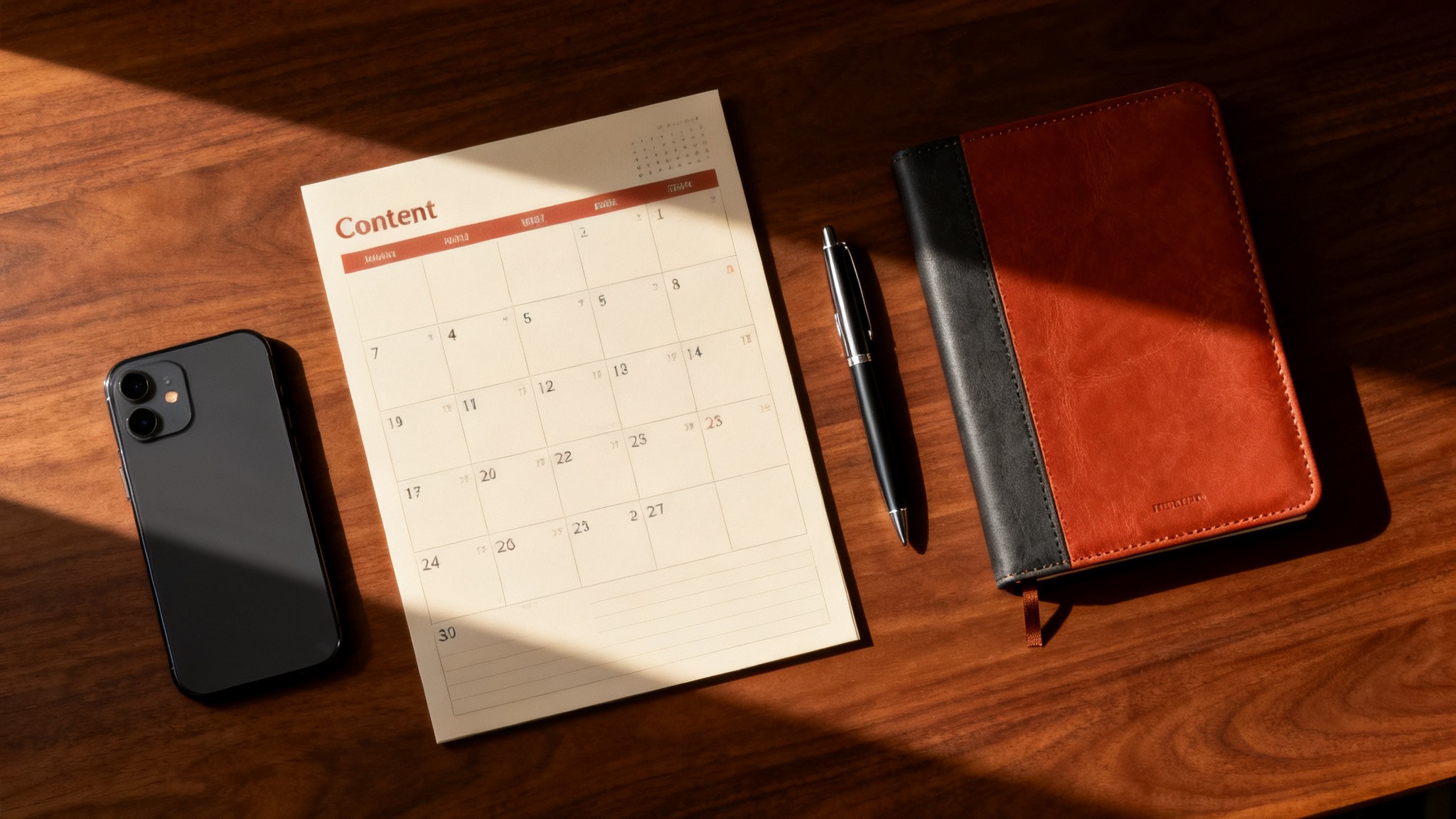
A calendar beats inspiration. The accounts that grow are the ones that post predictably, week after week.
Posting four to seven times a week is the working range for an AI influencer account in growth mode. Below four, the algorithm forgets you. Above seven, quality usually drops. Lead with short video, because Reels and short TikToks get far more reach than static posts, and back it with feed photos and daily stories.
Batch your production. Because your character lives in a model you control, you can generate a week or two of content in one sitting, then schedule it. That is the real operational advantage of an AI persona over a human creator: no shoot days, no travel, no waiting on a photographer. Get your formats right by checking Instagram Reel length limits and the complete Instagram post sizes guide so nothing gets cropped or downranked on a technicality.
Pro tip: Keep a running "what worked" doc. Every week, note the post that overperformed and why. Within two months you will have a format playbook specific to your character, and you can stop guessing.
Step 5: Turn the audience into income

The public account builds the audience. A subscription platform is where most AI influencer income actually lands.
The public accounts grow the audience. The money usually comes from somewhere else. The standard model in 2026 is to build the following on Instagram and TikTok, then funnel the most engaged fans to a subscription platform like Fanvue, where the income comes from subscriptions, pay-per-view content, and paid direct messages.
There are several income layers, and serious operators stack them:
Income stream | How it works | When it kicks in |
|---|---|---|
Subscriptions | Monthly recurring fee for exclusive content | Once you have a few thousand engaged followers |
Pay-per-view | One-off paid posts and message unlocks | Alongside subscriptions |
Paid DMs | Charging for direct-message interaction | Mid-stage, once fans are invested |
Brand deals | Sponsored posts once the account has reach | 30,000-plus engaged followers |
Affiliate | Commission on products you feature | Any stage, scales with reach |
Entry-stage accounts in their first few months typically see modest numbers. Mid-tier AI influencers with strong, engaged followings can stack these streams into a real monthly income. The spread is wide and depends almost entirely on consistency and audience quality, so be skeptical of anyone promising a fixed figure on a fixed timeline.
Step 6: Scale to a portfolio

Once one character works, the system is repeatable. The second persona is far faster than the first.
The reason people build AI influencers instead of becoming creators themselves is that the model is repeatable. Once your first character has a working niche, a production pipeline, and a posting system, the second one is mostly copy and paste. You already know the niche research, the consistency setup, the cadence, and the funnel.
Do not start the second character until the first is genuinely stable, though. Two half-built accounts lose to one that works. The operators who scale well treat the first persona as the template, document everything, and only then duplicate. Building each new character on a platform that handles likeness for you, like Foxy's AI influencer tools, is what makes the portfolio approach realistic instead of a full-time grind per account.
What it costs and how long it takes
The honest version: this is cheaper than almost any other business you could start, but it is not free and it is not instant.
Tooling runs from a low monthly subscription for an all-in-one platform up to a few hundred a month if you stitch together separate tools for images, video, and voice. An AI content platform like Foxy starts at $29 a month, with most creators spending around $50 a month, which is less than a dollar a day and a fraction of what a single photo shoot would cost. The bigger cost is time. Plan for three to six months of consistent posting before monetization is meaningful. The accounts that quit do so in month two, right before the curve usually starts to bend.
Common mistakes that kill AI influencer accounts

Most failed AI influencer accounts die from the same handful of avoidable mistakes.
Inconsistent likeness. The number one killer. If your character's face drifts, nothing else matters. Solve consistency before you scale anything.
Skipping the personality. A faceless feed of portraits with no voice, no opinions, and no story does not retain anyone. The character has to feel like a person.
Posting in bursts, then disappearing. Ten posts in two days and then silence for three weeks tells the algorithm the account is inactive. Steady beats heavy.
Pretending it is a real human. Beyond the trust problem, this puts you on the wrong side of platform labeling rules. Open AI personas do fine. Caught fakes do not.
Treating it as passive income from day one. It is a business that becomes semi-passive once the system is built. The build is real work.
Chasing the explicit shortcut. Shock content gets a spike and then caps your ceiling, because brands will not touch it and platforms throttle it. Mainstream and tasteful is the durable path.
Getting started

Start with one character, one niche, and a real posting commitment. Everything else builds from there.
If you want to move this week: pick the niche, write the one-page character bible, lock the face with a tool built for likeness, build a starter library of twenty to thirty images and a few videos, set up the Instagram and TikTok profiles, and commit to a posting cadence you can actually hold for ninety days. That is the whole on-ramp.
The technology stopped being the hard part a while ago. What separates the accounts that earn from the ones that fade is treating it like the business it is.
Foxy AI is the leading AI content tool built for creators. Build your AI twin in under 10 minutes from a few photos, then generate as many ultra-realistic photos and videos as you want. Used by over 11,000 paying creators, with plans from less than $1 a day.
Get started at foxy.ai · See how AI influencer creation works
Frequently asked questions
Is it legal to create an AI influencer?
Yes. Creating a fictional AI character and running a public account for it is legal. The lines you do not cross: using a real person's likeness without permission, and pretending the persona is a real human in ways that mislead. Build an original character and disclose that it is AI.
Do I need to tell people my influencer is AI?
You should, and increasingly you have to. Instagram and other platforms are rolling out AI-content labels, including optional profile labels that mark an account as AI. Disclosure builds trust and keeps you compliant. Audiences in 2026 are comfortable with openly-AI personas.
What is the hardest part of creating an AI influencer?
Character consistency. Generating one good image is easy. Generating the same recognizable person across hundreds of posts, outfits, and scenes is what separates accounts that grow from accounts that stall. This is why a tool built around a single likeness matters.
How much does it cost to start?
An all-in-one AI content platform starts around $29 a month, with most creators spending about $50. If you assemble separate tools for images, video, and voice, expect more. The larger investment is the three to six months of consistent posting before monetization gets meaningful.
How long until an AI influencer makes money?
Most accounts need three to six months of consistent posting before monetization is meaningful. Early income is modest. It scales with audience size and engagement quality, not with how many images you post.
Where do AI influencers actually make money?
The public accounts on Instagram and TikTok build the audience. Income usually comes from a subscription platform like Fanvue through subscriptions, pay-per-view content, and paid DMs, plus brand deals and affiliate commissions once the account has real reach.
Can I run more than one AI influencer?
Yes, and the portfolio model is the main reason people choose AI influencers over personal creator accounts. Get the first character stable and documented, then the second is far faster. Do not split focus across two half-built accounts.
What niche should my AI influencer be in?
Pick a niche with clear commercial demand: fashion and lifestyle, fitness and wellness, travel, or gaming and tech. Each has a built-in audience and a built-in set of advertisers. Avoid niches with no obvious way to monetize.
Can I use an AI influencer for brand deals?
Yes, once the account has real reach, usually north of 30,000 engaged followers. Brands increasingly work with AI personas. A mainstream, tasteful, well-disclosed account is far more brand-friendly than one chasing shock content.
Do AI influencers need video, or are photos enough?
You need video. Short video gets far more reach than static posts on both Instagram and TikTok. The good news is that a tool built around your character can generate video from the same likeness, so you are not choosing between formats.
Related guides
About the author
Marcus Lane covers AI personas and creator monetization for the Foxy AI Academy. He writes about building, launching, and scaling AI influencer accounts into real businesses.
By
Marcus Lane
Senior Writer, Foxy AI Academy
Marcus Lane covers AI personas and creator monetization for the Foxy AI Academy. He writes about building, launching, and scaling AI influencer accounts into real businesses.