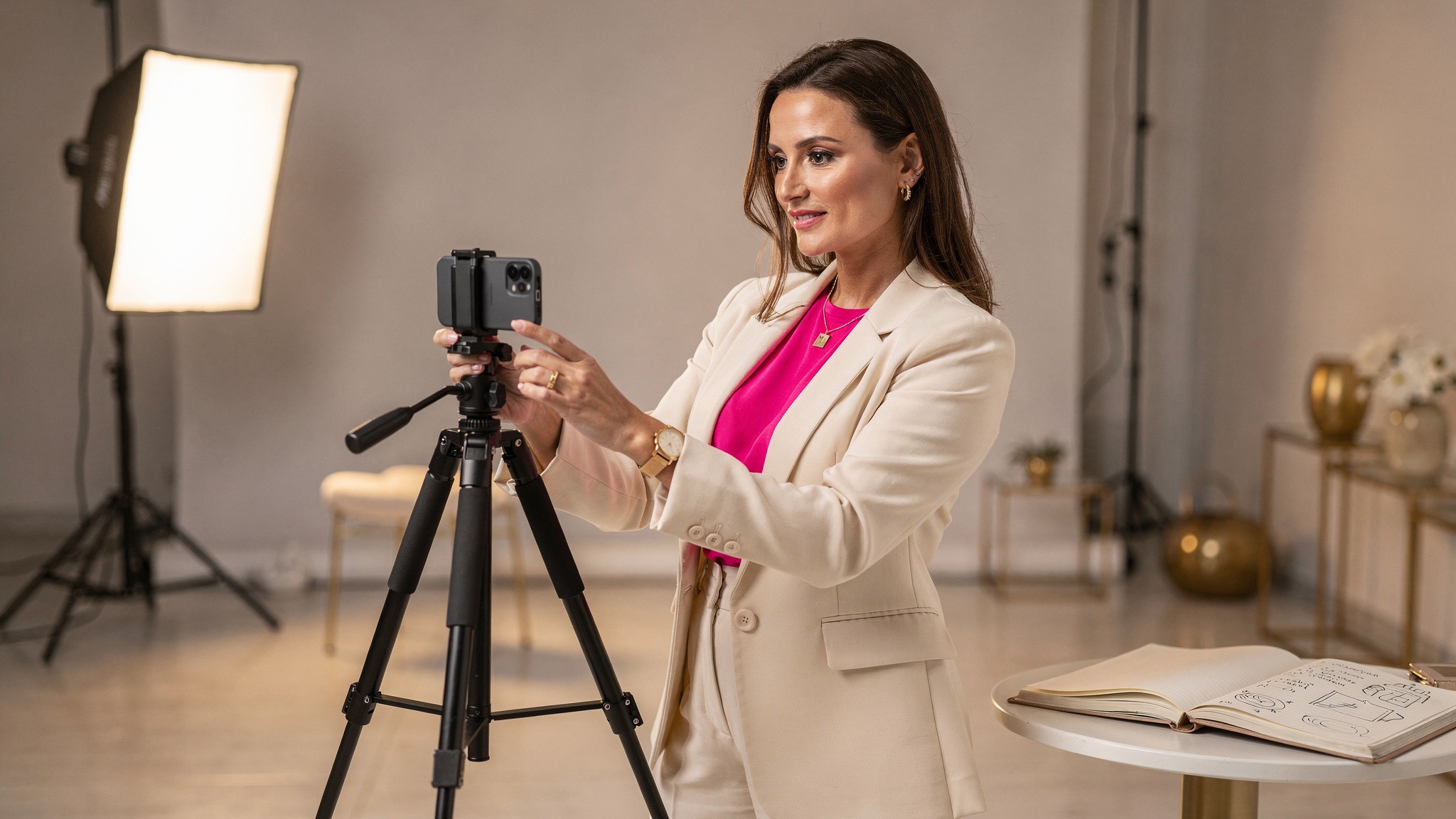

By
Mia Torres
Content Strategist, Foxy AI Academy
How to Become a Content Creator in 2026 (Beginner's Guide)
By Mia Torres, Content Strategist · Last updated May 2026 · 16 min read
Over 200 million people now call themselves content creators, and the creator economy is on track to hit roughly $314 billion in 2026. The catch: only about 4% of creators earn over $100,000 a year, and half make under $15,000. The difference between the 4% and everyone else is not talent or luck. It is a system. This guide walks you through exactly how to become a content creator in 2026 from a standing start, what to pick, what to post, what to buy, how often, where the money actually comes from, and the mistakes that quietly kill most new accounts before they reach 1,000 followers.
Want to post more without shooting more? Foxy builds your AI twin from a few photos so you can generate ultra-realistic content of yourself in any setting on demand. Plans start at less than $1 a day. Get started with Foxy
Key takeaways
The creator economy will hit ~$314 billion in 2026, but earnings are concentrated. Treat content creation like a business from day one or you stay in the 50% earning under $15k.
Pick one niche, two platforms, and one format. Trying to be everywhere on day one is the most common failure pattern for new creators.
Posting 3 to 5 times a week is the proven sweet spot. Accounts at that cadence grow about 2x faster than sporadic ones.
Your first 1,000 followers usually take 1 to 3 months with a real plan. After that, brand deals start at $10 to $100 per post on nano tier and scale fast.
Income is almost never one stream. Full-time creators average four platforms but only about 1.9 actually generate revenue. Build the system, not the dependency.
Quick answer: what it takes to become a content creator
Question | Real answer |
|---|---|
What you need to start | A phone, a niche, and a posting schedule. That's it. |
Minimum gear cost | $0 to start. $200 to $500 once you commit. |
How long until your first $ | 3 to 6 months for affiliate or tips. 6 to 12 months for brand deals. |
Best platforms in 2026 | TikTok, Instagram Reels, YouTube Shorts. Pick two, not all three. |
Posting cadence | 3 to 5 times a week minimum on your main platform. |
Time to first 1,000 followers | 1 to 3 months with a real strategy. |
Average creator income | ~$62,000/year in the US, but distribution is brutal. |
What you'll learn
How to pick a niche that can actually pay
Which platforms to start on (and which to skip)
How to build a content system you can actually sustain
The gear that matters versus the gear that wastes money
Posting cadence and what the 2026 algorithms reward
Growth tactics that work for accounts under 10,000 followers
The seven real ways creators make money
Legal and tax basics nobody warns you about
The 90-day plan to go from zero to your first 1,000 followers
Why 2026 is a strange time to start
The creator economy is bigger than it has ever been. According to Goldman Sachs analysis cited across industry trackers, the market is on a path to nearly $480 billion by 2027. TikTok grew its audience 17% year over year, Instagram crossed 3 billion monthly active users, and over 165 million new creators have joined major platforms since 2020.
The opportunity is real. The competition is also real. The good news is that the algorithms in 2026 reward consistency and watch time, not follower count. A 200-follower account with a great hook can outperform a 200,000-follower account that phones it in. The bar to start has never been lower. The bar to stand out has never been higher. The creators who win this year are the ones who build a repeatable system instead of chasing virality.

The starting kit for becoming a content creator in 2026 looks more like a notebook and a phone than a film studio.
Step 1: Pick a niche that can actually pay
Niche is not a vibe. It is a business decision. The cleanest way to pick one is to find the overlap between three things: what you genuinely care about, what you have some knowledge or perspective on, and what brands actually spend money in.
The big-money niches in 2026 are finance, education, health and fitness, beauty, fashion, travel, parenting, food, tech, and gaming. These are the verticals where brand deals, affiliate commissions, and ad RPMs are highest. Entertainment and comedy can hit huge view counts but tend to monetize at lower CPMs because the audience is harder to convert.
How to choose between three possible niches
If you have three ideas, score each one on five questions:
Can you talk about it for an hour without prep?
Is there a clear audience that already searches for it?
Do brands sell things to that audience?
Are there at least 10 creators doing it well? (If zero, it's probably not a real market.)
Is there a sub-angle you can own that the big creators don't cover?
Your niche is the one with the highest combined score. Pick it. Commit for at least 90 days before reconsidering.
Don't pick "lifestyle"
"Lifestyle" is the most common starter niche and the worst one. It tells the algorithm nothing and tells viewers nothing. A clean niche is specific enough that someone could describe your account in one sentence to a friend. "Cheap-eats reviewer in Brooklyn." "Strength training for women over 35." "Travel hacks for one-bag minimalists." Those are niches. "Lifestyle creator" is not.
Pro tip: Write your niche as a single sentence on a sticky note: "I help [specific person] do [specific thing]." If you can't fill in those blanks in 10 seconds, you don't have a niche yet, you have a hobby.
Step 2: Choose your platforms
Most new creators try to be everywhere on day one. This is how they burn out by month three. Pick one main platform and one supporting platform. Master the main one for 90 days before you add a third.
The three platforms that matter in 2026 for short-form, image-and-video creators are TikTok, Instagram (specifically Reels), and YouTube Shorts. Each has a different personality, audience, and monetization curve.

TikTok, Instagram Reels, and YouTube Shorts dominate short-form content creation in 2026. Pick two, not three.
Platform comparison
Platform | Best for | Algorithm strength | RPM (1k qualified views) | Best starting niches |
|---|---|---|---|---|
TikTok | Fast growth, discovery, virality | Strongest discovery for new accounts | $0.50 to $1.50 | Entertainment, niche education, food, comedy, beauty |
Instagram Reels | Brand deals, polished aesthetic, monetization | Strong if you already have a small audience | $0.10 to $3 (varies wildly) | Fashion, fitness, travel, beauty, lifestyle |
YouTube Shorts | Authority, long-term compounding, ad revenue | Slowest to start, highest ceiling | $0.06 to $0.10 for Shorts, $1.50 to $6 for long-form | Education, tech, finance, gaming, deep niches |
Threads | Engagement, conversation | Newest, fastest growing platform | None directly | Writers, commentators, news |
If you want fast growth and you are starting from zero, TikTok is still the easiest place to get distribution because the For You page surfaces brand-new accounts. The TikTok Creator Rewards Program replaced the old Creator Fund and now pays $0.50 to $1.00+ per 1,000 qualified views, a 25x jump from the old fund's $0.02 to $0.04. That said, TikTok payouts are still small compared to brand deals.
If you want to build a long-term asset, YouTube wins. A YouTube video published in 2020 still gets views and ad revenue today. A TikTok from 2020 is buried. Shorts is the gateway, long-form is the actual business.
If you want brand-deal money fast, Instagram is the answer. Brands still book Instagram more than any other platform because the analytics are clean and the audiences skew older with more buying power.
Pick your combo
TikTok + Instagram: most common for beauty, fashion, fitness, lifestyle. Cross-post Reels and TikToks with light edits.
Instagram + YouTube: best for serious niches with depth (finance, tech, education). Shorts for discovery, long-form for authority.
TikTok + YouTube: best for entertainers and educators who want to build a real audience asset.
Step 3: Build a content system you can actually sustain
This is where most aspiring creators die. They figure out the niche, pick the platforms, and then realize they have to produce three to seven pieces of content per week, forever, while also editing, captioning, and engaging with comments. The math breaks within a month.
The fix is a content system, not more motivation. A content system has four parts: a planning rhythm, a batching cadence, a content library you can pull from, and a workflow for capture, edit, and post.
The weekly rhythm that actually works
Sunday (30-60 min): plan the week. Write 7 to 10 post ideas. Pick the 5 you'll actually shoot.
One batching day (2-4 hours): shoot or generate everything for the week in one block. Different outfits, locations, backgrounds.
Daily (15-30 min): edit, caption, schedule, and engage. Treat it like email, not a creative session.
Weekly (30 min): review what worked. Save your top performers as templates.
The creators who scale do not produce content on a per-post basis. They batch. Batching is the single highest-leverage habit in content creation, and the one no beginner does.
Where AI changes the math
Batching used to mean a full day of shooting, which meant a stylist, a location, props, and the willingness to do all that every week. In 2026, AI content tools have made this dramatically cheaper. With Foxy's AI twin feature, you upload three photos of yourself, your AI twin is ready in under 10 minutes, and from there you can generate ultra-realistic photos and videos of yourself in any setting, outfit, or scenario. One real shoot a month plus AI fill for the rest of the calendar is now the workflow many full-time creators use to stay consistent without burning out.
This is not a replacement for being on camera. It is what lets you post the other four days a week when you do not feel like doing a full hair and makeup setup. It is also the difference between posting three times a week and posting five, which is the difference between an account that grows and one that stalls.

A weekly content system beats sporadic motivation. Plan on Sunday, batch once, post daily.
Want to see how AI content workflows actually work for a creator? See how Foxy works →
Step 4: Gear and tools for content creators
Almost nobody needs $2,000 of gear to start. Most viral creators in 2026 shoot on a phone they already own. Here is what to actually buy at each stage.
Gear by budget tier
Tier | Budget | What to buy | Why |
|---|---|---|---|
Starter | $0 | Your phone + a sunny window | Natural light beats cheap gear every time |
Beginner | $50 to $150 | A tripod with phone mount + a basic ring light | Steady shots and consistent light are 80% of "looking professional" |
Committed | $200 to $500 | Add a clip-on lavalier mic + a foldable reflector + better tripod | Audio is the #1 quality differentiator on short-form |
Scaling | $500 to $1,500 | A dedicated content phone, lighting kit, props, basic backdrop | When content is your job |
Pro | $2,000+ | Mirrorless camera, dedicated lenses, full lighting | Only if you have a clear reason your phone is the bottleneck |
Most creators overspend on cameras and underspend on audio. A $35 lav mic from a brand like RØDE does more for your perceived quality than a $1,500 mirrorless body.
Software stack to start
Editing: CapCut is free, fast, and built for short-form. Most TikTok and Reels editors use it.
Graphics and thumbnails: Canva for everything visual. Free tier is enough to start.
Scheduling: Later or Buffer once you cross five posts a week.
Trends and audio tracking: the native TikTok Creative Center is free and shows what audio is trending now.
AI content fill: Foxy for AI photo and video generation of yourself once you commit.
That stack covers 95% of what you need. Resist the urge to add more tools. Tool sprawl is procrastination in disguise.
Step 5: Posting cadence and what algorithms reward in 2026
Here is the answer most creators do not want to hear: posting more is the single biggest growth lever. Buffer's analysis of more than 2 million posts found that accounts posting 3 to 5 times per week grow followers about 2x faster than accounts posting sporadically, and see roughly 12% more reach per post.
But more is not infinite. There is a ceiling.
Posting cadence by platform
Platform | Sweet spot | Ceiling | What kills you |
|---|---|---|---|
TikTok | 1 to 3 posts per day | Don't exceed 3 to 4 per day | Zero-post days hurt more than wrong-post days |
Instagram Reels | 4 to 7 per week | More than 2 Reels per day | Audience fatigue, lower average views |
Instagram Feed | 3 to 5 per week | 1 per day | Reposts that don't earn distribution |
YouTube Shorts | 1 per day | 3 per day | Inconsistent uploads break the algorithm |
YouTube long-form | 1 to 2 per week | 3 per week | Quality drop kills your channel |
The thing that matters more than cadence is consistency. Posting 3 times a week for a year beats posting daily for a month and then disappearing. Algorithms reward streaks. They punish silence.
What the 2026 algorithms actually reward
Across Instagram's own ranking documentation and the public TikTok and YouTube algorithm signals, the same three things keep showing up:
Watch time and completion rate. How long do people stay? Did they finish? A 15-second video watched to completion outranks a 60-second one watched to 30%.
Sends and shares. How often does your post get DMed to someone? This is the strongest signal for reaching non-followers in 2026.
Saves and rewatches. People save things they want to come back to. Tutorials, lists, and reference content get heavy save weight.
Likes are still useful but they are the weakest of the four. Build for shares and saves, not likes.
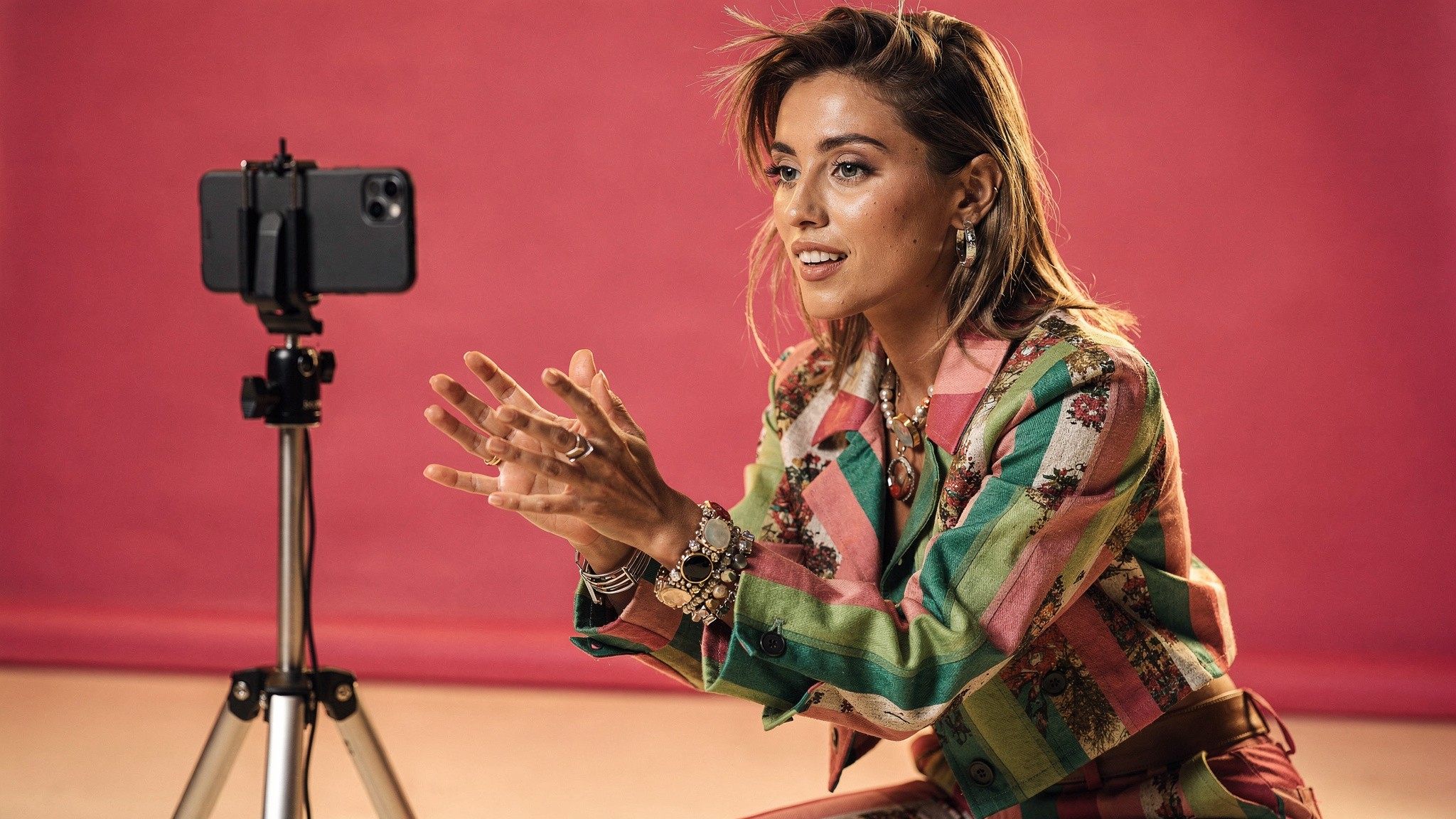
The first three seconds of a Reel decide everything. Algorithms reward retention, not duration.
Step 6: Growth tactics that work for small accounts
When you are under 10,000 followers, you have to fight harder for distribution. Here are the tactics that actually move the needle for new creators in 2026.
Write hooks that survive the first three seconds
Up to 50% of viewers drop off in the first three seconds of a Reel. That means your hook is not a nice-to-have, it is the entire game. The slow build kills you. "Hey guys, welcome back" loses half your audience before you say anything worth hearing.
Hook patterns that hold:
Contradiction: "Everyone says X. Here's why X is wrong."
Specific outcome: "I went from 0 to 50,000 followers in 90 days doing this one thing."
Open loop: "I tried [X] for 30 days and the result wasn't what I expected."
Pattern interrupt: start mid-action, mid-sentence, or with a visual that doesn't match the audio.
Use hashtags strategically, not lazily
Hashtags are not dead but they are diminishing returns. On Instagram, 3 to 8 highly relevant hashtags per post outperform 30 generic ones. Mix one big hashtag (1M+ posts), three medium (100k-500k), and a few small niche ones. Our optimal hashtag count guide breaks down the exact mix that works in 2026.
Collaborate before you have an audience
Three things to do every week, even at zero followers:
Comment thoughtfully on 5 to 10 larger accounts in your niche. Not "love this!" Actual perspective. Other followers will click your profile.
Reply to other people's videos. TikTok's reply-with-video feature is the fastest way to borrow someone else's audience.
Reach out to one similar-sized creator per week for a collab. Two 500-follower accounts that swap audiences become two 700-follower accounts.
Optimize your profile for the click
A creator profile is a one-second decision. Three things matter:
Profile picture: clear face, on-brand, recognizable as a thumbnail.
Bio: what you do + who you do it for + one specific result. Skip the quotes and emojis.
First three posts visible: these are your storefront. They should be your three best, not your three newest.
Pro tip: Every time you cross a follower milestone (500, 1k, 5k, 10k), refresh your pinned content and your bio. The reasons people followed at 500 are different from why they will follow at 10k. Update accordingly.
Step 7: How content creators actually make money in 2026
This is the section everyone reads first. Here is the honest version: full-time content creators average four platforms but only 1.9 of those generate revenue. That tells you most of the story. Income is rarely one stream. It is usually three or four small streams that add up to a real number.

Creator income comes from stacking small streams. Brand deals, affiliate, products, and platform payouts together build the real number.
The seven main revenue streams
Revenue stream | When it kicks in | Typical range |
|---|---|---|
Platform ad revenue | YouTube: 1,000 subs + 4,000 watch hours. TikTok: 10k followers + 100k recent video views | $50 to $5,000+/month at scale |
Brand sponsorships | 5k followers (nano tier) | $10 to $100 per post (nano), $200 to $2,000+ per post (micro) |
Affiliate marketing | Day one, any size | 5 to 30% commission. Real income at 10k+ engaged followers |
Digital products (courses, ebooks, presets) | 2k to 5k engaged followers | $500 to $10,000+/month |
Physical products / merch | 10k+ followers | Low margin until scale |
Paid platforms (Patreon, Substack, subscription-based creator platforms) | 1k engaged followers | $5 to $50 per subscriber/month |
Services and consulting | Niche-dependent | $500 to $5,000+/project |
Brand deal rates by tier
Based on Influencer Marketing Hub's 2026 rate report and aggregated industry data:
Tier | Followers | Instagram post | Instagram Reel | TikTok | YouTube dedicated |
|---|---|---|---|---|---|
Nano | 1k-10k | $10-$50 | $20-$100 | $20-$100 | $100-$500 |
Micro | 10k-50k | $100-$500 | $200-$1,500 | $200-$1,500 | $500-$3,000 |
Mid-tier | 50k-500k | $500-$5,000 | $1,000-$10,000 | $1,000-$10,000 | $3,000-$25,000 |
Macro | 500k-1M+ | $5,000-$25,000+ | $10,000-$50,000+ | $10,000-$50,000+ | $25,000-$100,000+ |
Engagement rate matters more than follower count at every tier. A 25k-follower account with 10% engagement often books $800 to $2,000 per post versus the $400 to $1,000 base rate.
What the average creator actually earns
The average US content creator earns around $62,000 a year, but that hides a brutal distribution. Roughly 50% of creators globally earn less than $15,000 annually, and only 4% clear $100,000. Beginners typically earn $0 to $100 a month for the first few months. Growing creators (10k to 50k followers) often hit $1,000 to $10,000 a month. The six-figure tier requires either heavy brand-deal volume, a strong digital product, or platform ad revenue at scale.
The single biggest income unlock is not getting bigger. It is diversifying. A 20k-follower account with three revenue streams almost always makes more than a 100k-follower account riding on TikTok payouts alone.
Step 8: Legal, tax, and business basics nobody warns you about
The boring section that saves you thousands of dollars and a panic attack in April.
Treat it like a business on day one
Track every dollar. Use a separate bank account or at least a separate card. Wave and QuickBooks Self-Employed are both fine starter options.
Save 25-30% of every payment for taxes. US self-employment taxes will surprise you. Set the money aside the day a brand pays you.
Get an EIN (if US). Free, takes 10 minutes on the IRS website, and lets you sign brand contracts without using your SSN.
Form an LLC once you cross $30k a year. Liability protection plus optional S-corp election as you grow. Talk to an accountant, not just the internet.
Disclose paid content. Always.
The FTC requires clear and conspicuous disclosure on any sponsored post. "#ad" or "Paid partnership with [Brand]" at the start of the caption, not buried in hashtags. Platforms also enforce this through built-in paid partnership labels. Use them. Brands lose campaigns over disclosure violations and they will remember which creators put them at risk.
Contracts: never work without one
Even on a $50 deal. A basic creator contract should cover scope (what you deliver), timeline, usage rights (how long the brand can use your content), exclusivity (can you post for a competitor next week), payment terms, and revisions. Free templates exist all over Google. The minute you cross $500 deals, pay $200 once for a proper template from a creator-focused lawyer.
Image rights and AI content
If you generate AI photos or videos of yourself (with a tool like Foxy), you own the output. If you generate someone else's likeness without permission, you are creating legal risk. The rule is simple: use AI on your own likeness, never on someone else's. Disclose AI-generated content in your alt text or caption when it might mislead viewers. Transparency keeps you on the right side of platform rules and audience trust.
Step 9: Common mistakes new creators make
Most of these are obvious in hindsight. None of them feel obvious in the moment.

Most new creators don't fail at content. They fail at the system around the content.
1. Trying to be everywhere on day one
Five platforms, three formats, two niches. By month three, they have posted 12 things total and given up. Pick one main platform. Master it.
2. Quitting after the first month
The 1,000-follower line takes 1 to 3 months with a real plan. The 10,000 line usually takes 6 to 18 months. Most creators quit at month two, which is exactly when the data needed to make their account work is finally available.
3. Posting whatever they feel like
Every post is a signal to the algorithm about what your account is for. Posting a niche video one day and a vacation reel the next confuses the algorithm and the audience. Stay in lane until you have permission to leave it (usually around 50k followers).
4. Skipping the hook
Spending the first three seconds saying hi, panning to themselves, or warming up. Half the audience is gone by then. Start in the middle of the action.
5. Optimizing for likes instead of saves and sends
Likes are the weakest 2026 signal. Saves and sends drive reach. Design content that someone would want to bookmark or DM to a friend. That is the post that travels.
6. Buying gear instead of producing content
Camera shopping is the most common form of procrastination in creator content. Phone + window light + a hook beats expensive gear every time. Buy gear only when you have evidence it is the bottleneck.
7. Ignoring analytics
Most new creators post and pray. The ones who grow review their top-performing post every Sunday and ask three questions: what was the hook, what was the format, what was the topic. Then they make more of that.
8. Reposting other people's content
Instagram now gives 40 to 60% less distribution to reposts, and accounts that post 10 or more reposts in 30 days get cut from recommendations entirely. Make things. Do not aggregate.
9. Avoiding the camera
Faceless accounts grow slower than face-led ones in 2026, full stop. If being on camera is the hard part, this is where AI content tools earn their keep. With your AI twin built from Foxy, you can show up consistently on camera without the daily makeup, lighting, and reshooting cycle. The audience builds parasocial connection with a face. Give them one.
10. Burning out at month three
The single biggest reason creators quit is not lack of growth, it is exhaustion. The fix is the system, not more discipline. Batch your shoots, use AI to fill the calendar between shoots, and treat content like a job with hours instead of a hobby that consumes every evening.
Step 10: The 90-day plan to go from zero to your first 1,000 followers
If you do nothing else from this guide, do this. The first 90 days set the trajectory.

A 90-day plan beats a perfect launch every time. The goal is data, not virality.
Days 1-30: Set up and ship
Week 1: Pick your niche, pick two platforms, write your bio, take your profile photo. Set up your editing app and your scheduling app. Pick three creators in your niche to study weekly.
Week 2: Shoot or generate your first batch of 10 posts. Post your first 3. Watch the analytics on each daily for the first 48 hours.
Week 3: Post 3 to 5 more. Reply to every comment within 12 hours. Comment thoughtfully on 5 to 10 larger accounts in your niche every day.
Week 4: Review your first 10 posts. Identify your top performer. Make three variations of it next week.
By day 30, you should have 10 to 15 posts up, a clear sense of which format works, and somewhere between 50 and 300 followers. If you have zero traction, the issue is probably the niche or the hook, not the volume.
Days 31-60: Iterate and accelerate
Double down on what worked. Most accounts have one or two formats that outperform the rest 5 to 10x. Make more of those.
Increase cadence. Move from 3 posts a week to 5. Use batching to make it sustainable.
Start replying with video. Use your audience's comments as content.
Reach out for one collab. Find a creator at your size or slightly larger and propose a swap.
By day 60, you should be at 300 to 800 followers if you are on TikTok, 200 to 500 on Instagram, less on YouTube unless one Short hits. Either way, you should have clear data on what works.
Days 61-90: Compound and monetize
Stay in your top format. Resist the urge to redesign your whole account because one post flopped.
Add the first monetization layer. Affiliate links in your bio. Start applying for the platform's creator program if you hit the threshold.
Pitch one nano brand deal. $20 to $100. Yes you can charge.
Build your second platform. Now you have content that works, repurpose it.
Most creators hit 1,000 followers between day 45 and day 90 if they execute this. The follower count itself does not matter. What matters is that you now have a system, evidence of what works, and the discipline to repeat it.
Related guides
FAQ: how to become a content creator in 2026
How long does it take to become a content creator?
You can publish your first post today. Becoming a sustainable creator with real income usually takes 6 to 18 months of consistent posting. Most creators hit 1,000 followers in 1 to 3 months with a real plan, and start earning brand-deal money around the 5,000 to 10,000 follower mark.
Do I need a degree or certification to be a content creator?
No. There is no credential required. The creator economy rewards results, not resumes. What matters is whether your content earns attention and converts that attention into revenue streams. The closest thing to a credential is a public portfolio of work that performs.
How much money can a content creator make?
The average US creator earns around $62,000 a year, but the distribution is extreme. Roughly 50% of creators globally make under $15,000, and only 4% clear $100,000. Income depends on niche, platform, audience size, and how many revenue streams you stack. Most six-figure creators run at least three streams.
What is the best platform to start on as a new creator?
TikTok is still the easiest platform to get distribution from zero because the For You page shows new accounts to non-followers. Instagram Reels is best if you want brand deals fast. YouTube Shorts is the slowest to start but builds the most durable long-term asset. Pick one main platform and one supporting one.
Do I need expensive equipment to start?
No. A phone, natural light from a window, and a tripod cost under $50 total and are enough for most niches. The biggest quality differentiator is audio, so a $35 clip-on lavalier mic is the best gear upgrade once you are committed. Cameras are usually procrastination.
How often should I post when starting out?
3 to 5 posts a week on your main platform is the proven sweet spot. Accounts at that cadence grow followers about 2x faster than sporadic posters. Posting daily for a month then disappearing is worse than posting 3 times a week for a year.
Can I be a content creator without showing my face?
Yes, but it is harder. Faceless accounts (theme pages, faceless tutorials, AI-character accounts) grow more slowly because the audience builds less of a parasocial connection. If you do not want to be on camera every day, AI content tools let you generate images and videos of yourself without daily shoots. Tools like Foxy build your AI twin so you can show up on camera consistently without the production overhead.
What niche should I pick as a beginner?
Pick the overlap between what you care about, what you have a perspective on, and what brands actually spend money in. The big-money niches in 2026 are finance, health and fitness, beauty, fashion, travel, parenting, food, tech, and gaming. Avoid generic "lifestyle" as a starting niche, it tells the algorithm nothing.
How do content creators handle taxes?
In the US, set aside 25 to 30% of every payment for self-employment tax. Track every dollar in and out, ideally in a separate account. Get an EIN from the IRS for free so you do not have to give brands your SSN. Form an LLC once you cross around $30,000 a year in revenue.
Can AI help me become a content creator?
Yes, especially for the production bottleneck. AI tools handle planning, scripting, editing, captioning, and now image and video generation. The biggest leverage is on the content-volume problem: AI tools like Foxy let you generate ultra-realistic photos and videos of yourself in any setting from a few uploaded photos, which means you can post the four other days a week without doing a full shoot. That is usually the difference between an account that grows and one that stalls.
About the author
Mia Torres is a content strategist who writes about platform growth and content systems for the Foxy AI Academy. She covers what's actually working on Instagram, TikTok, and YouTube for creators scaling their output.
Ready to start creating?
Becoming a content creator in 2026 is not about going viral. It is about building a system you can run for a year without burning out, picking the right niche, posting consistently, and stacking revenue streams as you grow. The 4% of creators who clear six figures are the ones who treat it like a business from day one. The 50% who earn under $15k are usually the ones still treating it like a hobby in year two.
The single biggest unlock for new creators in 2026 is solving the content-volume problem. Foxy AI builds your AI twin from a few photos in under 10 minutes, then you generate ultra-realistic photos and videos of yourself in any setting, outfit, or scenario you want. Used by over 11,000 paying creators. Plans start at $29 a month, less than $1 a day.
By
Mia Torres
Content Strategist, Foxy AI Academy
Mia Torres is a content strategist who writes about platform growth and content systems for the Foxy AI Academy. She covers what's actually working on Instagram, TikTok, and YouTube for creators scaling their output.